Fibroadenoma
Fibroadenoma is the most common type of benign tumor found in the breast, primarily affecting young women aged 15 to 35.
Breast cancer is prevalent among women in Hong Kong. While mastectomy is crucial for treatment, many patients struggle with fears of losing femininity. Fortunately, advances in medical technology enable breast reconstruction even after total mastectomy, helping women restore their appearance and regain confidence without increasing risk of recurrence.
Dr. Ying Wai Leung Marcus, a specialist in General Surgery at Chiron Medical, emphasizes that immediate breast reconstruction after mastectomy is ideal. This approach preserves much of the breast skin and nipple, allowing for a new breast to be created right away. It minimizes psychological distress and often results in a more natural appearance.
Dr. Ying has observed many patients successfully reclaim their confidence following surgery. “There was a breast cancer patient who, with the strong encouragement of her family, opted for simultaneous mastectomy and reconstruction. After the surgery, she rebuilt her confidence and embarked on a more fulfilling life”, he said.
There are two primary methods for breast reconstruction: flap surgery and implant surgery, each with pros and cons.
Uses the patient’s own muscle and tissue from areas like the abdomen or back.
Pros
Natural appearance; no risk of rejection; fewer future surgeries needed.
Cons
Requires a new incision and longer recovery time.
Involves saline implants to fill the breast area.
Pros
No tissue harvesting needed.
Cons
Risks of rupture, displacement, or hardening; less natural breast shape and consistency.
最後更新日期: 2024年10月
本網站的健康資訊已由楷和醫療集團的醫生覆核。以上內容僅供參考,不可視作醫療建議,亦不能取代閣下就個人健康狀況向合資格的醫護人員作出諮詢。
Fibroadenoma is the most common type of benign tumor found in the breast, primarily affecting young women aged 15 to 35.
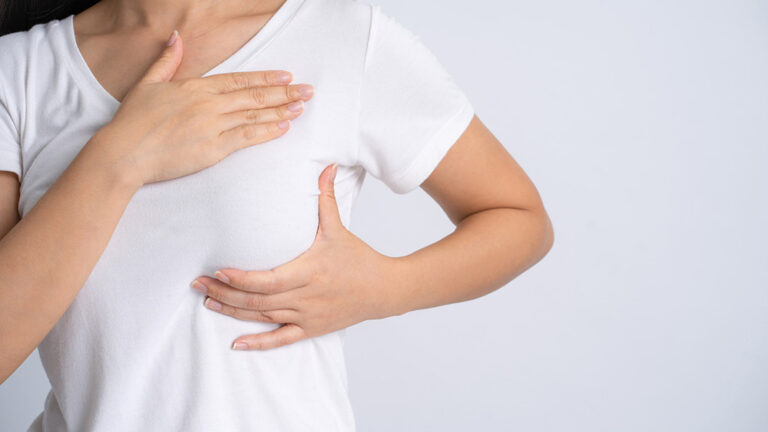
Breast cancer often does not present any warning signs, making regular check-ups essential. Doctors recommend that women over 20 perform monthly self-breast examinations, ideally 7 to 10 days after their menstrual period ends.
When a lump is detected during a routine breast examination, a breast surgeon will typically perform a triple assessment. The first step is a comprehensive breast examination, which includes palpation to assess any abnormalities in breast lumps, nipple discharge, skin…